
- Storm Response · Battery Backup Certified
Sump Pump Repair Arlington Heights | Trusted 24/7 Pump Help
Sump Pump Repair Arlington Heights service should move fast when the pit is filling, the alarm is sounding, or a storm is on the way. A local plumber in Arlington Heights handles same-day diagnosis, pump repair, replacement, and battery backup installation with clear pricing before work begins.
Same Day
Service Across 60004 & 60005
Stocked
Truck With Common Pumps
$0
Night, Weekend, Holiday Surcharge
- Beat the storm
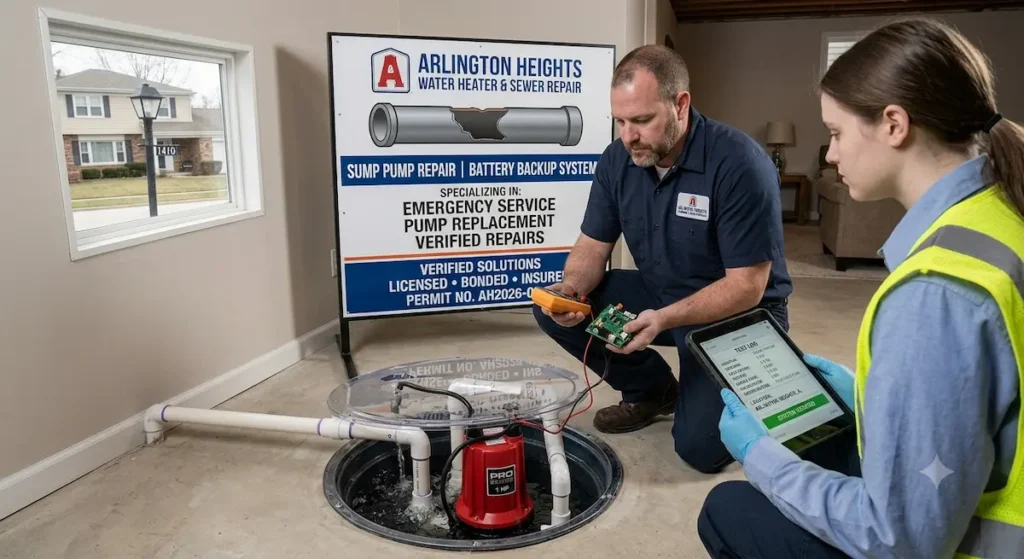
Battery backup ready
So the next power outage does not flood the basement
- The Quick Answer
Sump Pump Repair Arlington Heights homeowners can rely on starts with a clear diagnosis. Common repairable problems include a stuck float switch, worn check valve, clogged discharge line, tripped breaker, or debris around the impeller. If the pump is more than seven years old, badly corroded, or the motor has burned out, replacement is usually the safer call. A good technician should test the pump, explain the failure, quote the repair before work begins, and recommend a battery backup if your basement does not already have one.
Pump Is Silent and the Pit Is Filling Right Now?
If a storm is hitting Cook County, the alarm is sounding, or you can hear water rising in the pit and the pump is not kicking on, call an emergency plumber in Arlington Heights right away. Every minute of unpumped water at this stage is gallons closer to finished flooring, drywall, and stored belongings being damaged.
Six Signs You Need Sump Pump Repair in Arlington Heights
Sump pumps almost always show warning signs before they give out completely. The patterns below are how your pump tells you it is on borrowed time. Catching the failure between storms costs a fraction of a wet basement cleanup after one.
The Pump Runs Constantly
A pump cycling on and off every few minutes, or running for long stretches on a dry day, usually points to a stuck float switch, a failed check valve letting water flow back into the pit, or a pump that is undersized for the water volume coming in.
Strange Noises From the Pit
Grinding, gurgling, or a high pitched whine usually means the impeller is damaged or has debris caught in it. A loud humming with no water movement points to a seized motor. Either way the pump is at the end of its useful life.
Visible Rust or Corrosion
Iron stains, an orange residue on the pit walls, or visible corrosion on the pump body all signal that the motor or seals are deteriorating. Iron bacteria in the pit is also a clue that hard groundwater is accelerating wear on the unit.
Pump Is Over Seven Years Old
A residential sump pump in Northwest Suburbs basement conditions typically lasts seven to ten years. Once you cross seven, the math on a repair gets harder to justify. Most failures at this age are followed by another within a year.
Pump Cycles but No Water Pumped Out
You hear the motor running but the pit level does not drop. Three usual causes are a clogged or frozen discharge line, an air locked impeller, or a failed check valve that lets water cycle back into the pit instead of leaving the home.
Alarm Keeps Sounding
A high water alarm or backup pump alarm is the system telling you it is doing work the primary pump should be doing. This is never a nuisance to silence and ignore. Either the primary has failed or the inflow is overwhelming the system and a higher capacity pump is needed.
Common Sump Pump Problems We Repair
Most sump pump calls come down to the same handful of failures repeating themselves which include water heaters across thousands of homes in this area. Knowing what the technician is likely to find helps you understand the conversation when the truck arrives.
Stuck or Tangled Float Switch
The float switch is the part that tells the pump when to turn on. Debris in the pit, a tangled cord, or a pump that has shifted can pin the float against the wall. Easiest of all failures to fix and often resolved on the first visit.
Failed Check Valve
The check valve sits in the discharge line above the pump and keeps water from running back down into the pit after the pump shuts off. A worn flapper inside the valve causes the pump to constantly recycle the same water, driving wear and electric usage up.
Clogged or Frozen Discharge Line
In winter, the section of discharge line that runs outside the foundation can freeze solid, especially when termination is at grade rather than above ground. A frozen line means the pump fights against ice every cycle until it burns out. The fix is repositioning the termination or adding an air gap fitting. If the discharge path is blocked by debris or buildup, drain cleaning in Arlington Heights may be needed before the pump can move water properly.
Jammed or Damaged Impeller
The impeller is the rotating blade inside the pump that actually moves water. Gravel, screws, or hardened sediment from clay soil can lodge against it and either jam the motor or chip the blades. Sometimes recoverable with a cleaning, often a sign the pit itself needs a filter screen.
Tripped Breaker or Failed GFCI
A surge during a storm trips the breaker, or the dedicated GFCI outlet has failed and is no longer powering the pump. The pump may look perfectly intact while the basement floods around it. Always check power and reset the GFCI before assuming the pump itself has failed.
Dead Battery Backup System
Battery backup pumps fail silently. The day you need it during a power outage is the day you discover the battery has been dead for months. Most failures are aging batteries past five years, a corroded terminal connection, or a charger that never alerted the homeowner. Annual testing catches this.
Motor Burnout
End of life failure where the motor windings overheat and short. The pump hums or trips the breaker immediately when plugged in. Not repairable on residential units. This is the failure that always comes during the worst storm of the year, which is why we replace pumps before they get there.
Sump Pump Backup Options for Arlington Heights Homes
A properly protected basement in this part of Cook County has more than just a primary pump. Each layer covers a different failure mode, and serious storms can hit all three at once. Here is how they compare.
Layer 01
Primary Sump Pump
The submersible workhorse that sits in the pit and handles every storm under normal power. Common reliable brands installed in this area include Zoeller, Liberty, Wayne, and Hydromatic. Sized by horsepower and gallons per minute to match the pit volume and the inflow rate during heavy rain events.
- Cast iron or thermoplastic housing
- Tethered, vertical, or electronic float
- 7 to 10 year typical lifespan
Best for: every home with a sump pit, period. This is the foundation of basement flood protection.
Layer 02
Battery Backup Pump
A secondary DC powered pump sitting next to the primary, with its own float switch and a maintenance free deep cycle battery. When the power goes out, when the primary fails, or when the inflow exceeds primary capacity, the backup kicks in automatically and pumps for hours on a single charge.
- Runs through power outages
- Covers primary pump failure too
- Alarm alerts you when active
Best for: any home with a finished basement, valuable storage, or a history of storm power outages, which describes almost every home in the 60004 and 60005 zip codes.
Layer 03
Water Powered Backup
A backup that uses municipal water pressure rather than electricity to power a venturi style pump. No battery to die, no charger to fail. Limited by the strength of city water pressure at your house and not appropriate for homes on well water, but a long duration safety net when it fits.
- No battery maintenance ever
- Runs indefinitely during outages
- Uses municipal water as power
Best for: homes on the municipal water supply with consistent 50 PSI or better water pressure, and owners who want a maintenance free safety net beyond a battery system.
Choosing the Right Sump Pump Size for Your Basement
Oversizing a pump shortens its life by short cycling on every drop of water that enters the pit. Undersizing leaves you with flood risk every heavy rain. Sizing the pump correctly is half the job.
1/3 HP
Light Duty
Small Pit, Moderate Inflow
~ 42 GPM
Suited for smaller residential pits in homes with average groundwater levels and a single story basement footprint. Common factory default in many older Arlington Heights homes.
1/2 HP
Most Common
Standard Pit, Higher Inflow
~ 73 GPM
The right size for most homes in this area, especially properties on the heavy clay soil that holds water against the foundation. Handles spring snowmelt and severe storms without short cycling.
3/4 HP+
Heavy Duty
Large Pit or Severe Water Table
~ 110+ GPM
For homes near Salt Creek floodplain, larger footprint properties, or basements with two pumps tied to one pit. Required when seasonal water table reaches the slab level for extended periods.
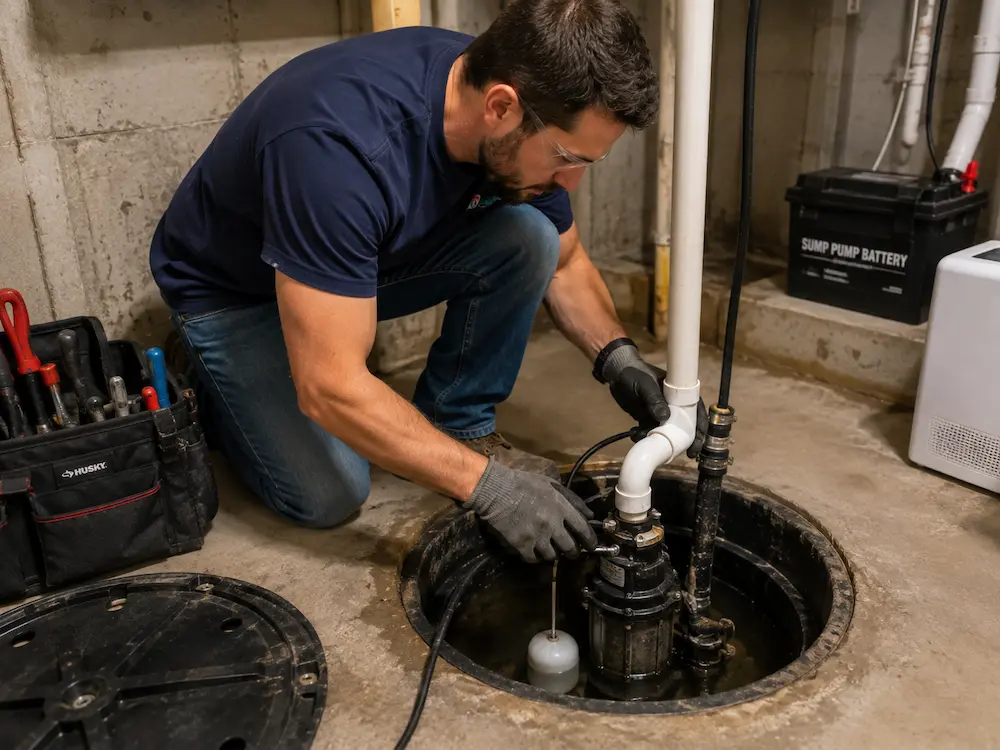
Why Sump Pumps Work Harder in Arlington Heights
The dense glacial clay under most of Arlington Heights does the opposite of sandy soil. It holds water against the foundation rather than letting it drain away. Combine that with spring snowmelt off Lake Michigan, sudden summer thunderstorm bursts, and the older shallow drain tile common in homes built between the 1950s and 1980s, sewer line system and the sump system runs harder here than it would in most of the country.
The sump pump repair Arlington Heights homeowners actually need is one that accounts for these specific local conditions. That means sizing the pump for the real inflow rate of clay soil, planning the discharge termination to survive winter freeze, and recommending a battery backup as a standard, not an upgrade.
- Licensed by Illinois Department of Public Health
- Zoeller, Liberty, Wayne, Hydromatic stocked
- Familiar with Cook County code and permits
- A local team, never a routing service
Six-Minute Pre-Storm Sump Pump Check
Run through this short check before the next Northwest Suburbs storm hits. It catches the most common failures like drain cleaning and leakage while there is still time to call instead of after the basement is already wet.
Pour a Bucket of Water Into the Pit
The fastest test there is. The float should rise, the pump should kick on, water should evacuate within seconds, and the pump should shut off cleanly. If any step fails, you have a problem to fix before the next storm.
Verify the Discharge Line Outside
Check where the discharge line ends. Water should flow 6–10 feet away from the foundation, with no ice, debris, or loose extension blocking the path. Homeowners can also review the Village of Arlington Heights sump pump guidance for drainage details.
Confirm the Pump Is Plugged in and Powered
It sounds obvious. It is also the single most common reason a pump fails to run during a storm. Make sure the outlet is dedicated, the GFCI has not tripped, and the cord is plugged in fully and not dangling toward the pit water.
Check the Battery Backup Status Light
If you have a battery backup, the control panel should show a green or steady light, not red, blinking, or chirping. A failing battery often fails silently for months until the day you actually need it during an outage.
Look for Rust, Stains, or Iron Sludge in the Pit
An orange residue, slimy buildup, or visible corrosion on the pump body all signal the unit is past its prime. Iron bacteria also coats the float switch and shortens its life, so a cleaning may help even if the pump is still running for now.
Note the Age of the Pump
Find the date stamp on the pump body or check your records. If the unit is past seven years old, you are working on borrowed time. Scheduling a planned replacement on a sunny day is always cheaper and less stressful than an emergency call mid storm.
Sump Pump Repair Costs in Arlington Heights
- These are honest typical ranges for the Arlington Heights area. Final pricing depends on pump brand, horsepower, access, and whether discharge line work is needed, and you always get an exact quote in writing before any work begins.
-
Standard Service Call and Diagnosis
starts ~ $59Often rolled into the labor
-
Float Switch Replacement
$165 to $285Tethered or vertical
-
Check Valve Replacement
$145 to $245Discharge line
-
Discharge Line Repair or Reroute
$245 to $485Per project
-
Pit Cleaning and Iron Sludge Removal
$185 to $295Includes inspection
-
Primary Sump Pump Replacement
$650 to $1,150Standard 1/3 to 1/2 HP, installed
-
Heavy Duty Pump Replacement
$950 to $1,6503/4 HP cast iron, installed
-
Battery Backup System Installation $950 to $1,750
Pump, battery, charger, alarm
-
Water Powered Backup Installation $1,250 to $2,200
For municipal water homes
-
Annual Pump Maintenance Inspection
starts ~ $129Test, clean, document
-
Night, Weekend, Holiday Surcharge
$0Our policy
- A standard service call and diagnosis typically starts around 59 dollars and is often rolled into the labor. Common repairs include float switch replacement at 165 to 285 dollars and check valve replacement at 145 to 245 dollars. A standard primary sump pump replacement runs 650 to 1,150 dollars installed, a heavy duty 3/4 HP cast iron unit 950 to 1,650 dollars, and a complete battery backup system 950 to 1,750 dollars including pump, deep cycle battery, charger, and high water alarm. Annual maintenance inspection starts around 129 dollars. There is no surcharge for nights, weekends, or holidays.
Neighborhoods and Towns We Serve
Same day sump pump service covers every Arlington Heights neighborhood including Scarsdale, Mount Prospect, Hasbrook, Ivy Hill, Pioneer Park, and Stonegate, plus the surrounding Northwest Suburbs of Chicago listed below.
Arlington Heights 60004 & 60005
The same same day response and transparent pricing applies across every neighborhood and town on this list.
Sump Pump Repair Arlington Heights FAQs
How long does a sump pump typically last in this area?
A residential sump pump in Arlington Heights basement conditions typically lasts seven to ten years. Hard groundwater, iron bacteria buildup, and the heavy duty cycling required by clay soil all shorten the lifespan compared to drier climates. Cast iron pump bodies generally outlast thermoplastic ones. Once you cross seven years, planning a replacement on a calm day is almost always cheaper than waiting for the failure to happen during a storm.
Is the pump silent right now and I have a storm coming, what do I do?
First, check power. Unplug the pump for five seconds and plug it back in to reset the float, then check the GFCI outlet for a tripped breaker. Second, look for an obvious stuck float by feel, not by hand if water is high. Third, call right away if the pit is filling and the pump is not coming on. Do not run sinks, showers, or laundry until the pump is working, and move anything off the basement floor that you would not want wet.
Should I repair or just replace my sump pump?
Repair makes sense when the unit is under five years old and the failure is a specific replaceable part like a float switch, check valve, or discharge line clog. Replacement makes sense when the pump is over seven years old, the motor has burned out, you have already paid for one repair on it, or the unit is visibly corroded. An aging pump that gets repaired typically fails again within a year, which is the worst possible time and the worst possible cost.
Do I really need a battery backup sump pump?
If you have a finished basement, valuable storage on the lower floor, or you have lost power during a storm even once, yes. The same severe weather event that overwhelms a primary pump is often the same event that knocks out the power feeding it. Battery backup is the single best investment a Northwest Suburbs homeowner can make in basement flood protection, and the cost is a fraction of a flooded basement cleanup.
What size sump pump do I need for my home?
A 1/3 HP pump moving about 42 gallons per minute is suited for small to medium homes with average groundwater. A 1/2 HP pump at about 73 GPM is the most common right size for typical Arlington Heights homes on heavy clay soil. A 3/4 HP heavy duty pump moving 100 GPM or more is appropriate for larger homes, properties near Salt Creek, or pits with two pumps tied to one basin. The technician sizes by measuring inflow rate during a test, not by guessing.
What is the difference between a sump pump and an ejector pump?
A sump pump handles clean groundwater seeping into a basement pit and discharges to the outside or storm sewer. An ejector pump handles sanitary wastewater from a basement bathroom or laundry below the level of the main sewer line and discharges to the sanitary sewer. They look similar but cannot be substituted for each other. If the sanitary line itself is blocked or damaged, sewer line repair in Arlington Heights may be needed instead of sump pump service.
Does the Village rebate program cover sump pump and flood control work?
The Village of Arlington Heights Sewer Back-up Rebate Program may help with qualifying overhead sewer conversion or alternate flood control work. Standalone sump pump replacement is generally not covered, but larger flood-control projects may qualify depending on the scope.
Do you charge extra for nights, weekends, or holidays?
No. Emergency sump pump service is available every day of the year with no after hours surcharge. The fair rate quoted on a Tuesday morning is the same rate during a Sunday night storm or on a holiday afternoon. Pumps do not fail on a convenient schedule and the pricing should not punish you for that.
Ready for Sump Pump Repair Arlington Heights Service?
Whether the alarm is sounding now, the pump is aging, or you want a backup before the next storm, our plumbing services in Arlington Heights are built around same-day response, clear pricing, and the right pump for the job. Call us today to serve you in a well mannered way.